
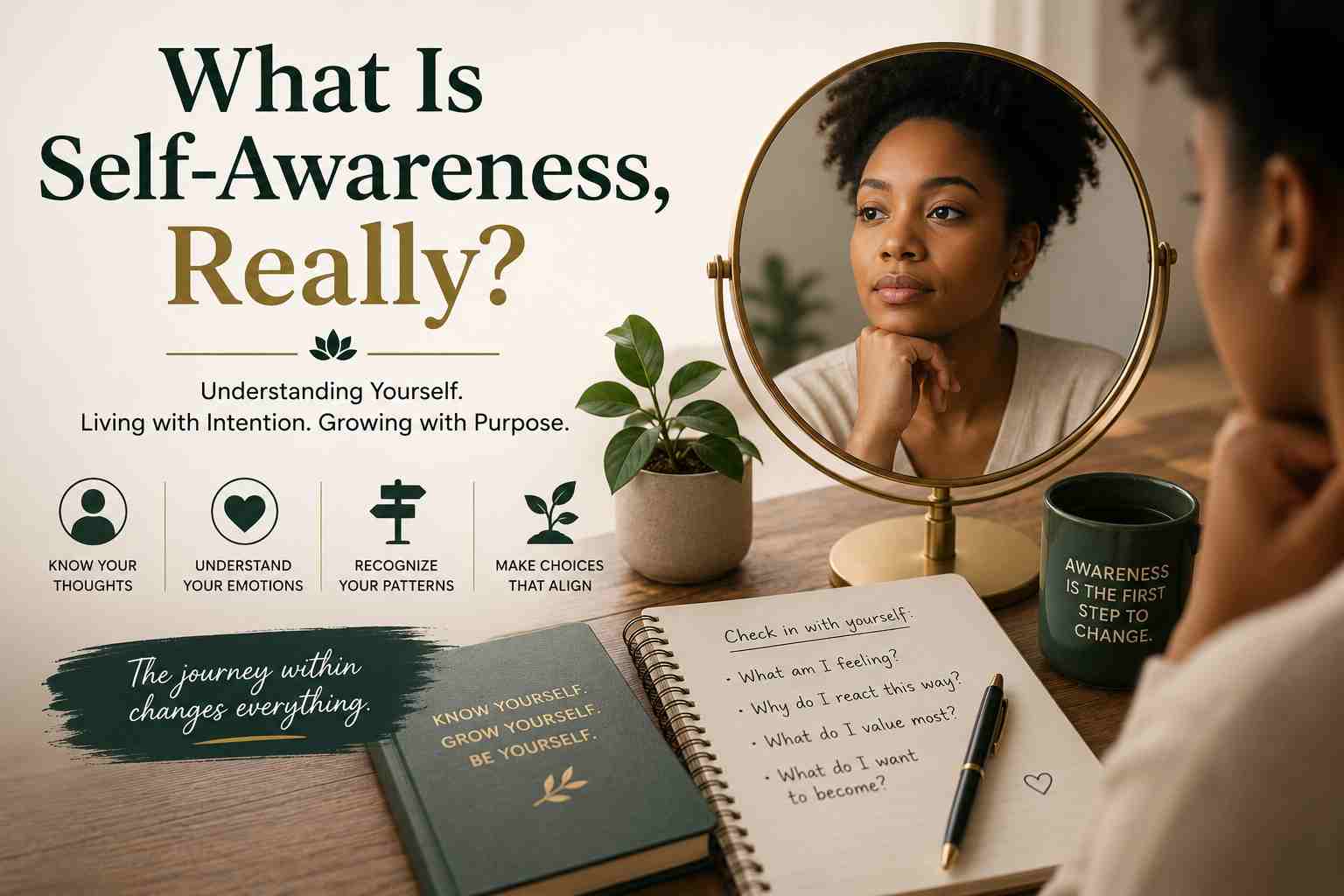
Self Awareness
What Is Self-Awareness, Really?
Let’s begin with a familiar story.
Imagine a young woman, she was good at her job – competent, dependable, and trusted -yet
the same pattern kept repeating. In meetings, she gets offended when questioned, heard
criticism where none was intended, and later replayed every interaction with quiet frustration.
She wasn’t reacting to the moment as much as to an old, unexamined story about having to
prove her worth. Without realizing it, her emotions were making decisions before her values had
a chance to speak. This is how self-sabotage often looks: not a lack of skill or competence, but
a lack of self-awareness.
An old teaching says, “Know thyself.” But knowing yourself is not the same as knowing your
ego.
It is not:
● What you think about yourself
● What others say you are
● The roles you have learned to perform
Your true self is deeper than that. It is your essence -the part of you that remains steady even
as seasons change.
Self-awareness is the practice of observing your inner life:
● What you think
● What you feel
● How those thoughts and feelings shape your reactions to external circumstances
It can be described simply as paying attention without judgment to what is happening within
you.
It is the ability to notice:
“I am feeling angry and I am aware that I am feeling angry.”
That space between experience and reaction is wisdom.
The Quiet Skills of Self-Awareness
Self-awareness is built gently, through practice:
● Recognizing and naming emotions
● Building a language for feelings
● Understanding the relationship between thoughts, emotions, and behaviour
● Learning the difference between having a feeling and acting on it
When you can name what is happening inside you, you are no longer ruled by it.
Why Self-Awareness Matters
Those who cultivate self-awareness often notice subtle but powerful shifts:
● Greater emotional self-control
● Better decision-making
● A clearer understanding of strengths and weakness
● Less self-deception, more self-acceptance
● The ability to pause instead of impulsive behaviour
An elder once said: “When you do not listen to yourself, life will find louder ways to speak.”
Self-awareness helps us hear the quiet signals early – before burnout, resentment, or
disconnection set in.
Practices That Cultivate Self-Awareness
There is no rush here. This is lifelong work.
Some gentle practices you could start today:
● Mindfulness and meditation, to observe thoughts and emotions without identifying with
them
● Journaling, to reflect on patterns, reactions, and values
● Building an emotional vocabulary, so feelings are not reduced to “bad” or “good”
● Seeking feedback from trusted people who see you clearly and kindly
I particularly like mindfulness as it shines light on emotions before they turn into actions. It gives
you the chance to respond in ways that align with your values rather than your trauma
Self-Awareness in Leadership and Work
In leadership and professional spaces, self-awareness is not optional. it is foundational.
Through my professional and lived experience, I have noticed the following traits about self-aware leaders:
Communicate more effectively
● Align actions with values
● Perform better under pressure
● Build trust more easily
Psychologist Tasha Eurich describes two kinds of self-awareness:
● Internal self-awareness: knowing your values, strengths, limitations
● External self-awareness: understanding how others experience you
Wise leadership requires both.
In Closing…
Self-awareness is not being self- conscious. It is about befriending yourself.
It is the slow, steady work of noticing:
● What moves you
● What drains you
● What matters most
And choosing again and again to live from that knowing.
With care,
Temitope